Study the existing city
Document building configurations, earthquake damage, materials and connections through field surveys, measurements and non-destructive testing in Zagreb.
ZAGGREGATE investigates how neighbouring historic buildings influence one another during earthquakes — and how they can be assessed and retrofitted without shifting risk from one building to the next.
Most assessment methods consider one building at a time. ZAGGREGATE instead studies the full masonry row: buildings of different heights, materials and floor systems that share walls, touch one another and respond together during an earthquake.
Document building configurations, earthquake damage, materials and connections through field surveys, measurements and non-destructive testing in Zagreb.
Use laboratory experiments, a large-scale shake-table test and calibrated numerical models to understand how damage develops within an individual building and across the row.
Compare interventions and identify solutions that reduce seismic risk across the aggregate while remaining compatible with Zagreb’s historic architecture.
Practical guidance for engineers to model, assess and design seismic retrofits for buildings within historical masonry aggregates.
See how the six work packages deliver this outcome →Historical urban blocks are heterogeneous systems, not repeated copies of one structural unit. Their seismic safety depends on what happens within each building and across the entire row.
Adjacent buildings influence one another during earthquakes.
Heights, floor layouts, materials and openings vary from unit to unit.
Wall–wall and wall–floor connections are often weak or uncertain.
In-plane and out-of-plane mechanisms may develop simultaneously.
Interventions in one building can alter the risk of its neighbours.
The Zagreb (ML 5.5) and Petrinja (ML 6.2) earthquakes caused severe damage across Croatia. In Zagreb’s historic centre, many affected buildings are unreinforced masonry units connected in rows and urban blocks.
Post-earthquake inspections showed why the individual-building view is not enough: geometry, floor levels, openings, materials and connections change from one unit to the next, while damage can propagate across the aggregate.
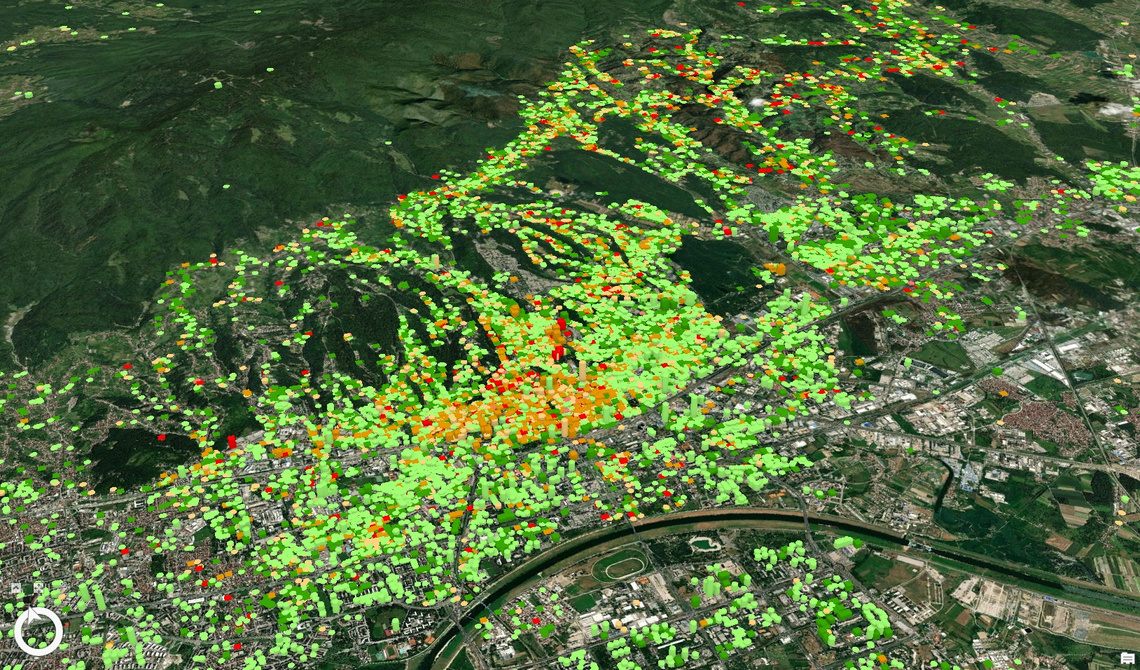
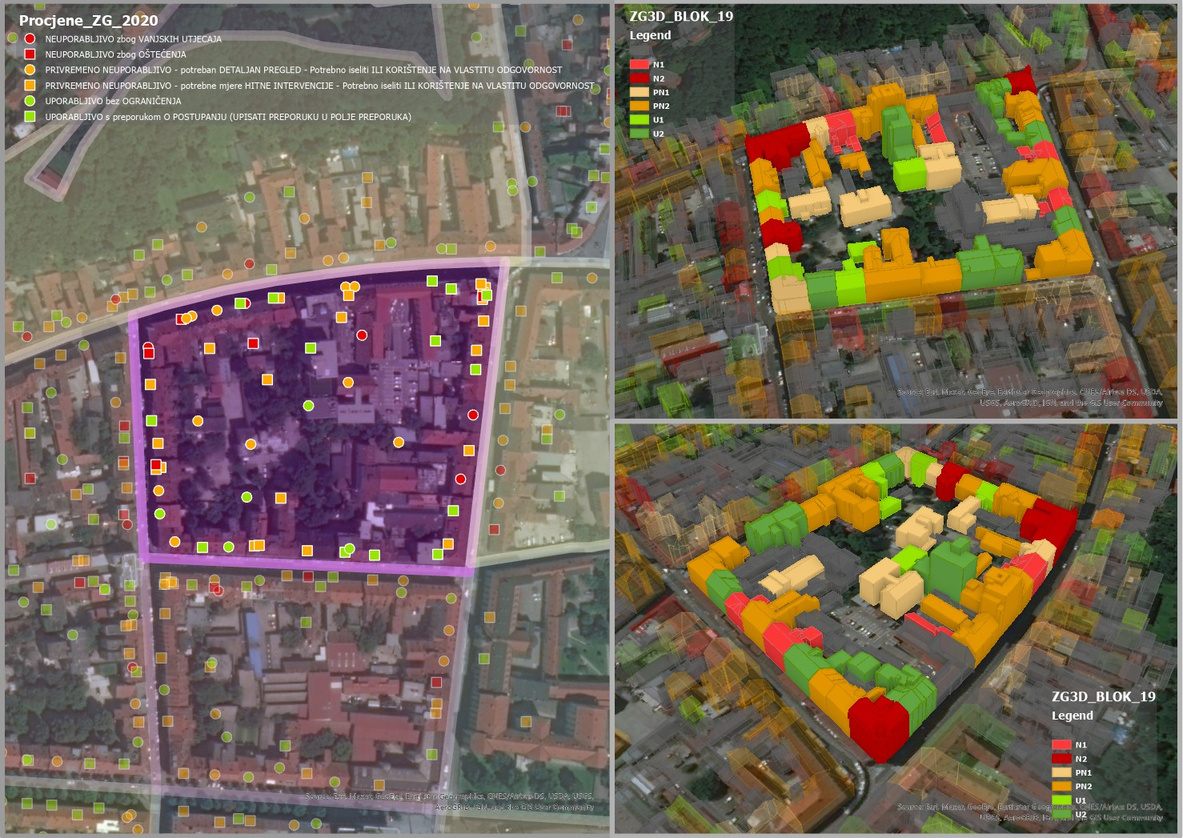
Spatial damage records and three-dimensional building data connect observed earthquake performance with typology, position in the row and interaction between adjacent structures.
ZAGGREGATE links fundamental research with practical outcomes for engineers, authorities and custodians of historic urban fabric.
Methods that represent aggregate-level behaviour and can be tested against evidence.
Quantified performance of historical masonry rows and their constituent units.
Interventions that improve safety while respecting historic fabric.
Datasets, publications, workshops and practical recommendations.